Deep & One-Off Cleaning
Hard surfaces and hard floors reset in the same visit as the soft furnishings.
Other Cleaning Services
Carpets, rugs, office chairs, sofas and fabric partitions cleaned by a method chosen for the fibre and construction, following inspection and a discreet test area. Genuine improvement is the objective; complete stain removal cannot be guaranteed.
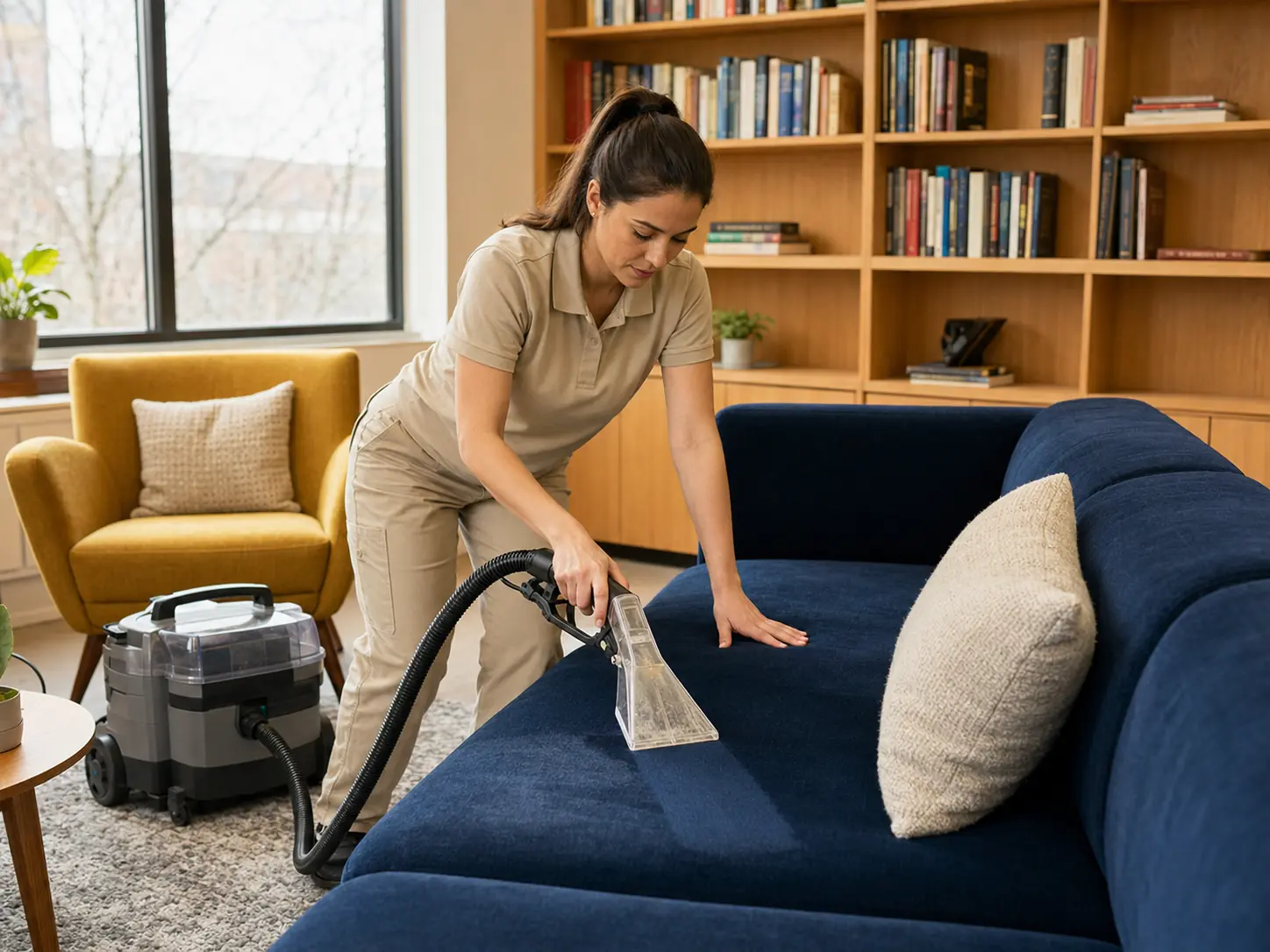
Extraction cleaning, with the method chosen for the fibre rather than for convenience.
Service overview
Almost every carpet and upholstery disaster is a method problem — the wrong amount of moisture, the wrong chemistry, or a fibre that was never suitable for the process applied to it.
Wool behaves nothing like polypropylene. A loop-pile contract carpet tolerates treatment that would flatten a cut-pile domestic one. Viscose, which appears in a great many attractive rugs and cushions, is damaged by water in ways that cannot be undone. A jute or hessian backing will shrink. Some upholstery is solvent-clean only, and treating it with water will mark it permanently.
So we inspect before we quote and test before we clean. We identify the fibre and construction where we can, check for existing damage, look for previous treatments — a carpet that has been shampooed repeatedly holds residue that attracts soiling faster than an untreated one — and clean a small, discreet area first to see how the material actually responds. That test tells us more than any amount of confident sales talk.
We do not guarantee complete stain removal, and we will not pretend otherwise. Some marks have dyed, bleached or physically damaged the fibre, and no process recovers them. Our objective is a genuine, visible improvement achieved by an appropriate method — and where we can see in advance that a particular mark is unlikely to respond, we tell you before the work rather than after it.
Time on site
Published so you can plan around the attendance. Like our prices, these are indicative starting points rather than fixed commitments.
Approximately 6–10 hours, plus drying time where applicable Typical indicative duration
Indicative durations are based on a typical medium-sized agreed scope. Larger, heavily used or more complex premises may require additional time. The final schedule is confirmed after the property requirements, access and service scope have been reviewed.
Drying time is quoted separately, not universally. It varies according to the material, the ventilation available, the treatment method chosen and the conditions on the day. We give you an expected range for your specific items in the quotation, because a single published figure would be misleading.
Staffing is not fixed in advance either. How many people attend, and for how long, is determined once the scope, access and property requirements have been reviewed.
What moves the duration
Determines the method, the equipment and how carefully the work has to proceed.
Established traffic lanes need more passes and longer pre-treatment dwell time.
An empty floor cleans far faster than one worked around desks, cabling and furniture.
Ventilation, humidity and whether air movers can be used all affect how long the area stays out of use.
Suitable properties
Commissioned periodically alongside a routine scope, as part of a wider reset, or as a single piece of work before a specific date.
Contract carpet and tiles across working floors, plus the task chairs that accumulate more than anybody expects.
Soft seating, fabric-covered acoustic panels and the rugs that define breakout zones in open-plan space.
The seating and floor coverings visitors see first, where appearance carries disproportionate weight.
Carpeted circulation in managed buildings, where traffic lanes soil far faster than the surrounding area.
Shared carpeted areas in apartment buildings, and soft furnishings in properties between tenancies.
Client-facing spaces where floor coverings and seating are part of the presentation rather than just the fit-out.
Technical sequence
Almost every carpet and upholstery disaster is a method problem: the wrong moisture level, the wrong chemistry, or a fibre that was never suitable for the process applied to it.
Fibre and construction identified where we can, manufacturer cleaning codes checked on upholstery, and existing damage, wear, fading and previous treatments recorded before anything is wetted.
A small, inconspicuous area is cleaned first to see how the material actually responds. If the test indicates the material is unsuitable for the method, we stop and discuss alternatives rather than proceeding and hoping.
Thorough dry soil removal first, because most soil in a carpet is dry particulate. Wetting it before it is lifted simply turns it into mud.
Traffic lanes and identified marks are pre-treated and given the dwell time the product actually needs. Marks unlikely to respond are pointed out to you at this stage.
Hot water extraction where the fibre and construction suit it, or a low-moisture method where they do not. Moisture is controlled deliberately — over-wetting causes shrinkage, wicking and lingering odour.
Pile groomed, air movement used where agreed. Drying time depends on the material, the ventilation, the method and the conditions, so we give you a range for your specific items rather than a universal figure.
You are told when furniture can go back, when normal use can resume, and how to treat a fresh spill so it does not become the next permanent mark.
Possible inclusions
Your quotation will confirm which items are included, the method proposed for each, and the drying time to allow — because a carpet that cannot be walked on for four hours affects your day as much as the price does.
Working process
We identify the fibre and construction where we can, check manufacturer cleaning codes on upholstery, and look for existing damage, previous treatments, fading and wear. Anything we find that will not respond to cleaning is pointed out to you at this stage, not discovered afterwards.
A small, inconspicuous section is cleaned first to see how the material actually responds — colour fastness, texture, and whether the intended moisture level is safe. If the test indicates the material is unsuitable for the method, we stop and discuss alternatives rather than proceeding and hoping.
Thorough vacuuming first, because most soil in a carpet is dry particulate and wetting it simply turns it into mud. Traffic lanes and identified marks are then pre-treated and given the dwell time the product actually needs.
Hot water extraction where the fibre and construction suit it, or a low-moisture method where they do not. Moisture is controlled deliberately — over-wetting is the most common cause of shrinkage, wicking and lingering odour, and it is entirely avoidable.
Pile is groomed, air movement is used where agreed to shorten drying, and we tell you how long the area needs to stay out of use. At completion we walk the work with you and are honest about anything that has improved but not disappeared.
Before we attend
Neither list is a hurdle. Each item removes a round of questions, sharpens the quotation and reduces the chance of something being discovered on the day.
After the work
The close-out is honest about what improved and what did not.
If something is not right, tell us promptly and we will agree how to put it in order. That process is set out in our Terms and Conditions.
Genuine, visible improvement is the objective. Complete stain removal cannot be guaranteed, and we will not pretend otherwise.
Pricing
An indicative starting price for an agreed service scope, published so you can judge the range before spending time on an enquiry.
How to read this figure Prices shown are indicative starting prices for an agreed service scope. The final quotation depends on the size and condition of the premises, cleaning frequency, access arrangements, working hours, staffing requirements, location, equipment, materials and any additional requirements. This price is not stated per hour, per visit, per week or per month unless an accepted quotation defines that basis.
Questions
Often we will improve them significantly. Sometimes we will remove them entirely. But we do not guarantee complete stain removal, and any company that does is either lucky or not being straight with you. A stain that has dyed the fibre, bleached the colour out of it or physically damaged it is permanent — the mark is now part of the carpet. What we will do is tell you at inspection which marks we expect to respond and which we do not, so you can decide whether the work is worth doing before you commit to it.
Because materials do not always announce what they are. Viscose looks like silk and is destroyed by water. Some dyes are not colourfast. A natural backing can shrink. Upholstery may be solvent-clean only. A discreet test area costs a few minutes and tells us how the material actually behaves — which is a far better basis for proceeding than an assumption. If the test shows the material is unsuitable, we stop and discuss it with you rather than continuing and hoping for the best.
It depends on the fibre, the method, the ventilation and the humidity, and the expected time will be in your quotation rather than left vague. Extraction-cleaned carpet commonly needs several hours before normal use; low-moisture methods are considerably quicker. Air movers can be included to shorten it. For commercial premises the usual arrangement is evening or weekend attendance so the area dries overnight and is ready for the next working day.
That is wicking, and it is a known behaviour rather than a failure. Where a spill has soaked down into the backing or underlay, moisture rising during drying can carry the residue back to the surface. It is most common with older, deeper contamination. Where we can see that risk in advance we will explain it before the work, and it can often be addressed — but it is honest to say it exists rather than let it come as a surprise.
Light, easily moved items can usually be shifted and returned as part of the work where that has been agreed. Heavy furniture, fixed seating, filing systems and IT equipment are not moved by us — the risk of damage to the item, the floor or somebody's back is not worth it. Clearing the area in advance produces a much better result and a lower price, so where it is possible we would encourage it.
Not under this service. Antique, hand-knotted and heirloom rugs need specialist assessment and are usually best cleaned off site by a dedicated rug specialist with the right facilities. Attempting them in situ risks dye migration and irreversible damage to something that may be valuable and irreplaceable. We would rather tell you to go elsewhere than take that risk with your property.
Related services
All services
Next step
Approximate area or item count, the fibre if you know it, the marks you are concerned about and when the space can be out of use. Photographs help considerably.